

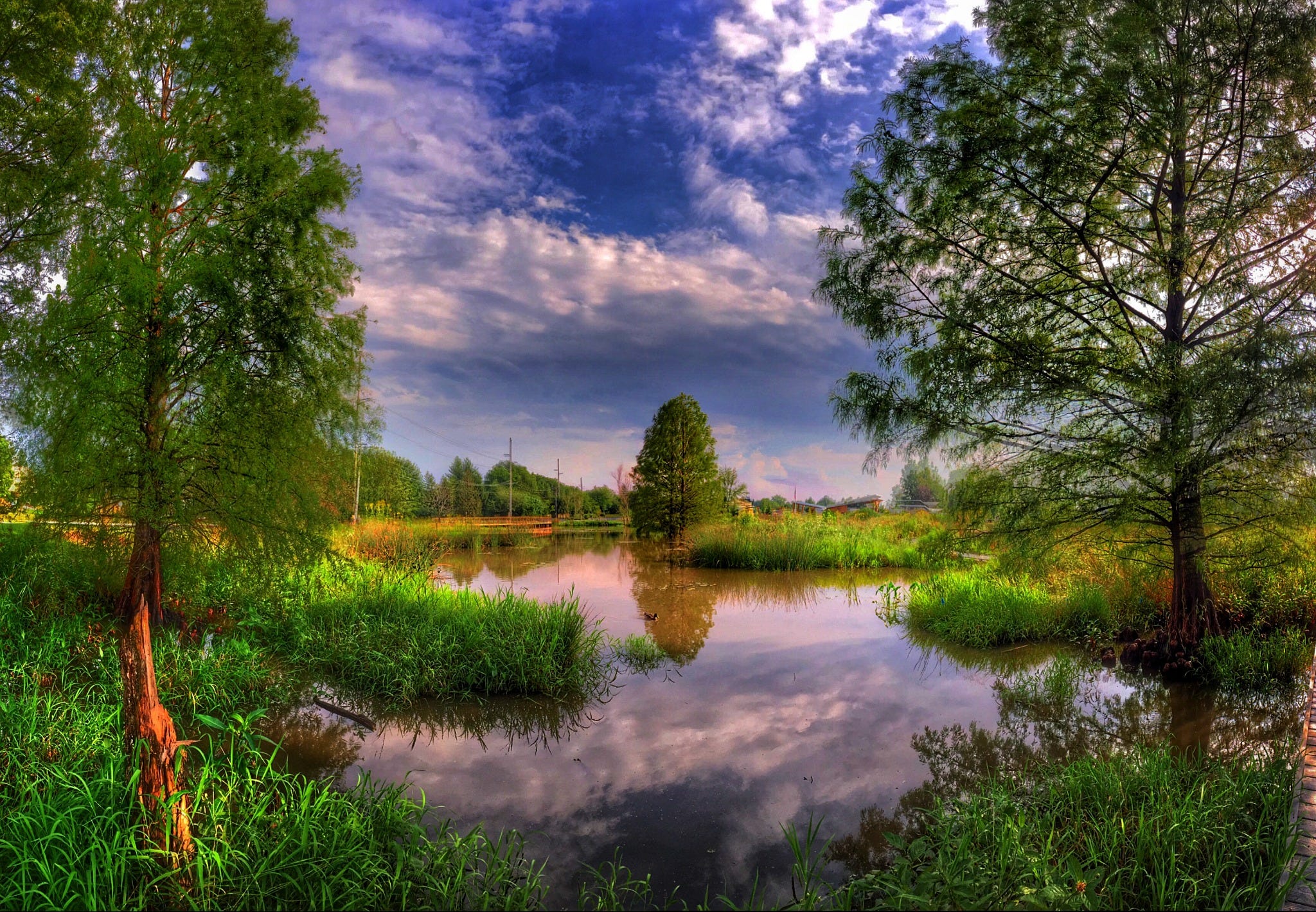
I make a lot of photos at the Highlands wetlands. Frog Fridays, egrets, hawks, lilies, and sunsets all ask something different of me. They require patience and timing. They also demand attention and a real consciousness of craft. This image did too, even though it began as something simple. It started as an iPhone panorama, shot and fully edited on the phone.
What caught my attention here wasn’t just the color. Even so, it’s impossible to overlook. I know photographers are often cautioned about saturation, and that warning is justified. Too much can flatten a scene and make it seem fake. But I believe this photograph works because the structure was established first. The composition was already doing its job before the greens deepened or the sky turned rich with blues and purples.
When I built the frame, I was responding to how the wetland enclosed itself. Trees rose on both sides like pillars. Grasses clustered at the water’s edge. The pool reflected in the center, giving the scene room to breathe. That shape mattered to me. The trees anchored the image. The water formed a central, peaceful stage for everything to unfold.
The reflection truly made me stop. I wasn’t just photographing the wetland itself; I was capturing its response. The clouds, the light, and the mood in the sky were mirrored in the still water, amplifying the scene’s impact. It transformed a simple landscape into something more layered, where earth and sky seemed to meet within the same frame. Water has that power. It stops being just foreground and becomes a partner in the composition.
The sky conveyed a lot of emotion that day. It had weight, movement, and tension. The water below stayed calm and reflective. That contrast is what gave the photograph its energy. I’ve learned over time that in landscapes, the land is only part of the story. The sky often sets the mood. Here, it was not just background. It was half the subject.
Color quickly became central to the image. Lush greens, deep blue and purple clouds, and warm light on grasses and the scene’s edges added richness. Wetlands can support that abundance; they are layered environments. Still, I wanted the color balanced across the frame, not concentrated in one loud area. That control kept the image intentional rather than chaotic.
I was also considering the edges. In a busy scene, the eye drifts if the perimeter fails. Trunks, reeds, and banks hold the frame together and keep the viewer focused inward. That may be a quieter part of landscape work, but it’s important. The edges often determine whether the center lingers.
I know the processing is strong. Some might see it as painterly rather than naturalistic. That’s intentional. This isn’t just a record of a place I visit often. It’s my interpretation of what it felt like to stand there: the light, the pressure of the weather, and the wetland glowing back at me shaped my image.
The lesson I learned from this frame is simple. Color can evoke feeling, but it can’t carry a photograph alone. It needs framing. It needs reflection. It needs a sky with presence and a composition strong enough to support the intensity. This image started as a phone panorama, but the same rule applies as always: let the color sing, but ensure the composition writes the song.

PhotoCamp Daily isn’t about the technical skills needed to be a good photographer or a photojournalist. There are numerous resources available, including videos, self-help books, training courses, and classes, as well as the power of social media as a learning tool.
PhotoCamp Daily focuses on learning to experience the process of creating good photos, observing subjects, and their connection to storytelling. It’s about learning to express yourself more effectively, shaping a shared understanding of your world, and embracing the new experiences you encounter.
PhotoCamp Daily is always free! But you can pledge support at any time.

Your words were a beautiful as the picture…keep on keeping on…