

Farmers’ markets offer easy color but difficult photographs. Produce may look appealing on its own, yet the strongest images also contain deliberate light, a clear subject, and a human gesture that turns a display into a scene.
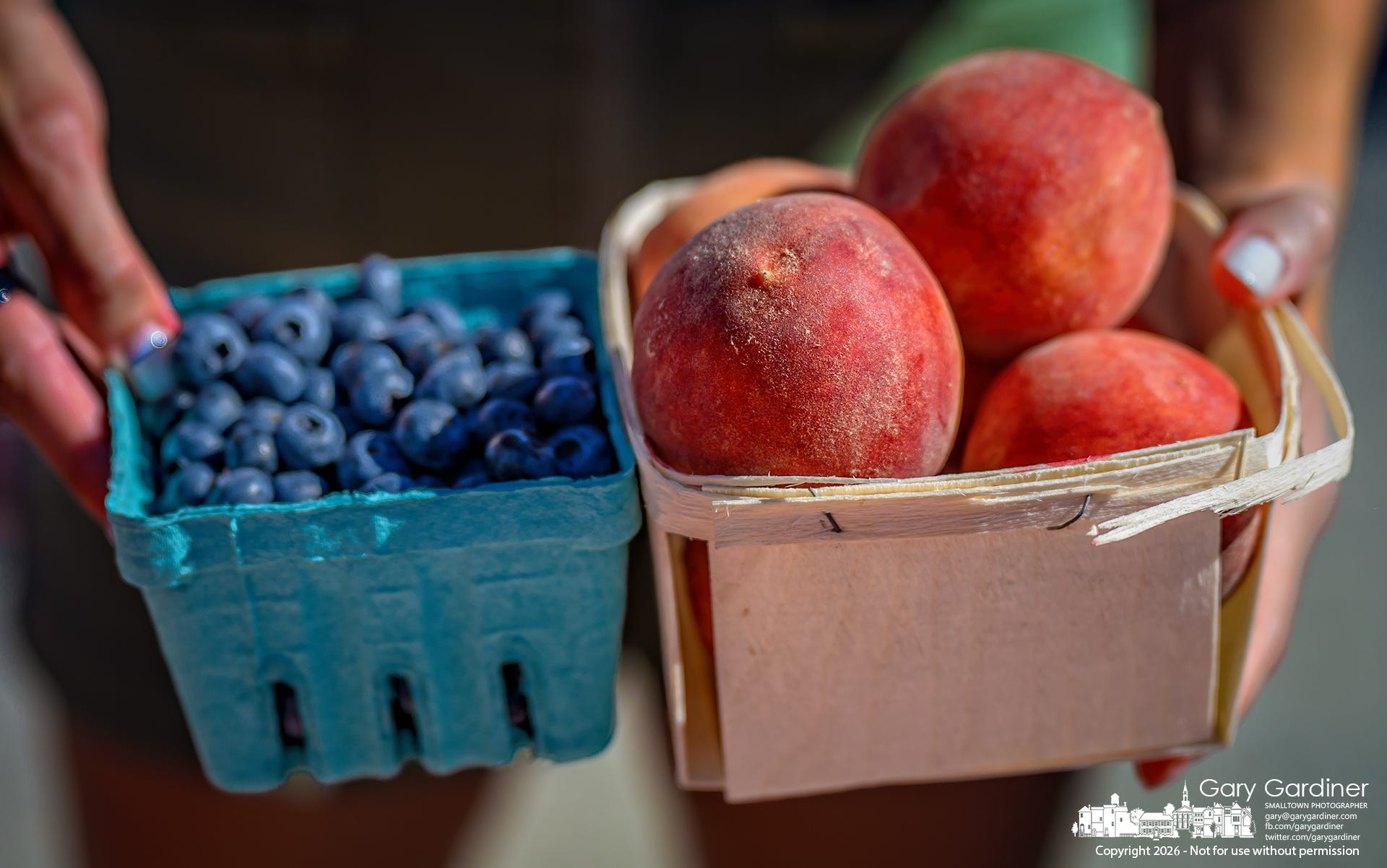
In this photograph, the fruit is the obvious subject, but the hands create the moment. They suggest an exchange and bring the viewer closer to the action.
The lesson is simple: Look beyond the objects and wait for interaction. A basket of peaches can be beautiful. A basket being offered, carried or searched tells a story.
Move in close
Busy backgrounds are among the biggest challenges at outdoor markets. Signs, tents, tables, and passing shoppers can quickly clutter the frame. Moving closer simplifies the scene and gives the photograph more impact.
Here, the baskets nearly fill the frame. The tight composition removes most distractions and emphasizes the peach fuzz, the bloom on the blueberries and the rough wooden containers.
Before reaching for a longer lens, try changing your position. A few steps forward or to one side can improve the image more than a change in equipment.
Use color as structure
The warm reds and oranges of the peaches contrast with the cooler tones beside them. That contrast gives the photograph energy and helps separate the two sides of the frame.
At a market, look for color relationships. Contrasting colors often create stronger compositions than scenes dominated by similar tones. Red tomatoes against green baskets, yellow flowers beside a blue shirt, or purple onions against pale wood can provide natural visual structure.
Let the light reveal texture
Side light is especially useful for photographing food because it creates small highlights and shadows across the surface. In this image, the light catches the fuzz on the peaches and the dusty bloom on the blueberries. Those details make the fruit appear tactile and fresh.
Midday sunlight can be harsh, so look for produce near the edge of a tent or canopy. That position often provides directional light without the extreme contrast of full sun. Expose for the brightest part of the fruit, then check that the highlights retain detail.
Choose one point of focus
Although several pieces of fruit are visible, the peach in front becomes the main subject because it is large, central, and sharply focused. The fruit and the hands behind it gradually soften, creating depth.
A wide aperture can help produce this effect, but focus placement matters just as much. Place the focus point on the most important piece of fruit, label or hand gesture. Do not assume the camera will choose correctly. If the depth of field is too shallow, stop down slightly so the essential details remain sharp.
Watch the edges
Close framing requires careful attention to the borders of the image. Hands, baskets, and other objects can easily be cut off in awkward places. Partial elements are not necessarily a problem, provided they appear intentional.
Before pressing the shutter, check all four corners. Decide whether a hand should be fully included, partially included or left out. The edge of the frame is part of the composition, not an afterthought.
Wait for the gesture
The final ingredient is timing. Rather than photographing only the display, watch for the moment when someone lifts a basket, reaches for a peach or hands over a purchase. These small gestures add warmth and scale without requiring a posed portrait.
A successful farmers' market photograph should do more than document what was for sale. It should make viewers imagine the basket's weight and the fruit's softness. That sensory connection turns a colorful market scene into a memorable photograph.

PhotoCamp Daily isn’t about the technical skills needed to be a good photographer or a photojournalist. There are numerous resources available, including videos, self-help books, training courses, classes, and the power of social media as a learning tool.
PhotoCamp Daily focuses on learning to experience the process of creating good photos, observing subjects, and their connection to storytelling. It’s about learning to express yourself more effectively, shaping a shared understanding of your world, and embracing the new experiences you encounter.
PhotoCamp Daily is always free! But you can pledge support at any time.
