

One Scene, Two Ways of Seeing
The assignment was simple: make a single photograph that represented the garage sale at the senior center. The complication came when I produced two photographs that worked for entirely different reasons. Choosing between them meant deciding not which photograph was better, but which story I wanted the photograph to tell.
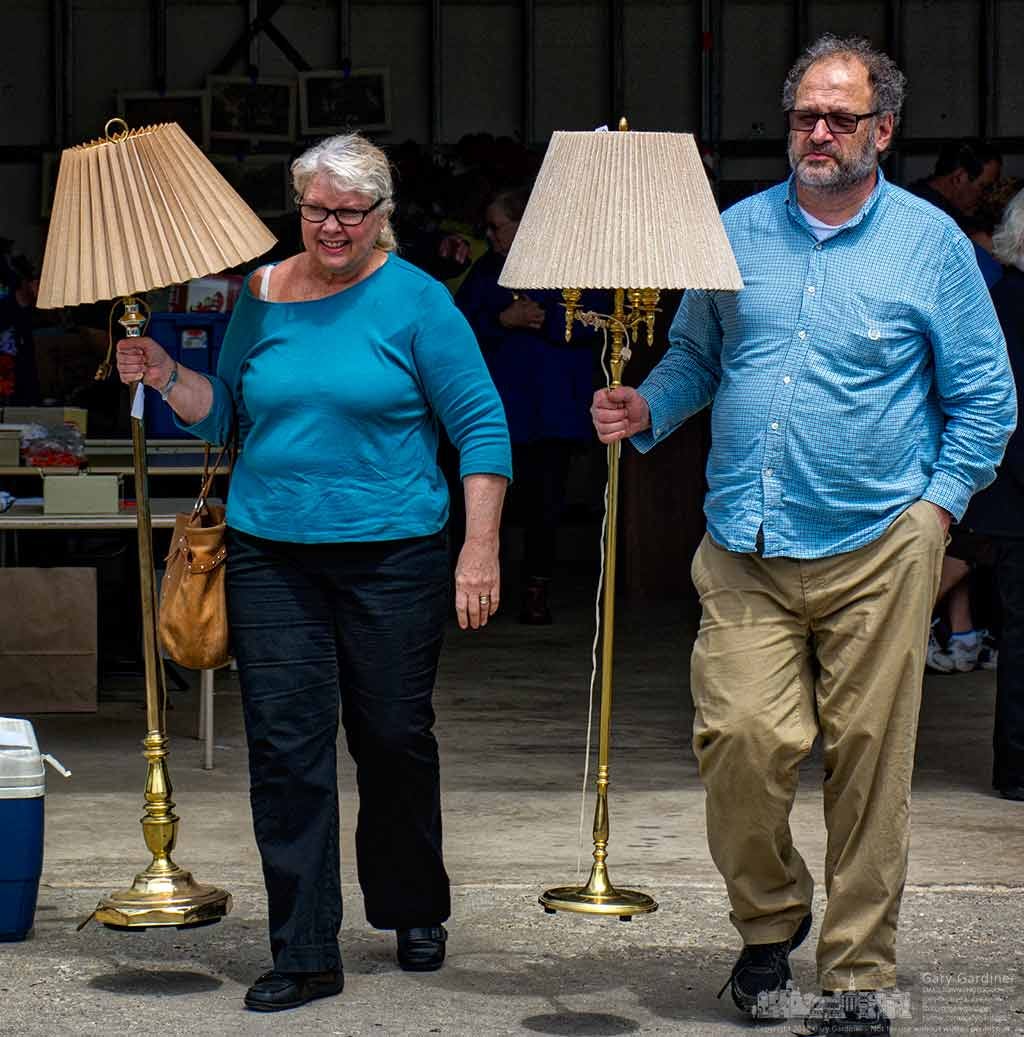
The wider photograph is about the garage sale itself. Two people emerge from the dark interior carrying floor lamps, an ordinary garage-sale transaction transformed into an unusual visual moment. The lamps immediately signal what is happening. The people are leaving with something they found and bought, while the activity visible inside provides enough context to place them within the larger event.
Its design depends heavily on repetition. Two people. Two lamps. Two tall vertical shapes moving forward together. The shades create large geometric forms above the figures, while the difference in their expressions keeps the symmetry from becoming too perfect. There is also an element of humor in seeing two people simply walking away carrying fully assembled floor lamps.
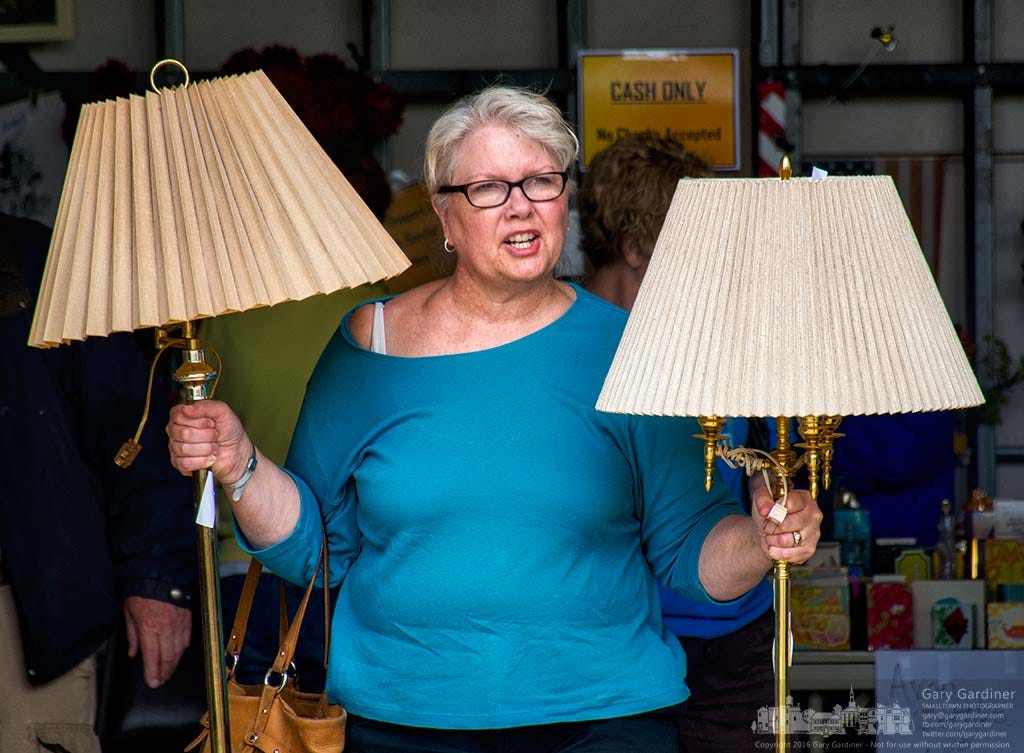
The second photograph moves away from describing the event and concentrates on one shopper. Now the lamps dominate. Their shades fill much of the upper frame and surround the woman’s face, turning merchandise into a compositional device. The “CASH ONLY” sign behind her adds a small but valuable piece of context. Even without seeing much of the sale, we understand that a transaction is occurring.
Distance changes the story. In the wider photograph, the moment organizes the frame. Both people are necessary to its balance and rhythm. In the closer photograph, proximity organizes it. One person disappears, the lamps become much larger graphic elements, and her expression becomes important.
If the assignment requires one photograph to represent the garage sale, the wider frame probably carries more descriptive information. But that doesn’t diminish the closer photograph. It simply has another purpose.
One says: This is what was happening at the garage sale.
The other says: This is what happened to one person at the garage sale.
The difficulty of choosing between them illustrates something useful about storytelling photography. Sometimes making the photograph that fulfills the assignment doesn’t end the possibilities. There may be another photograph, made seconds later and a few feet closer, that may tell a different story from the same event.

PhotoCamp Daily isn’t about the technical skills needed to be a good photographer or a photojournalist. Numerous resources are available, including videos, self-help books, training courses, classes, and social media as a learning tool.
PhotoCamp Daily focuses on learning the process of creating good photos, observing subjects, and connecting them to storytelling. It’s about learning to express yourself more effectively, shaping a shared understanding of your world, and embracing new experiences.
PhotoCamp Daily is always free! But you can pledge support at any time.
