

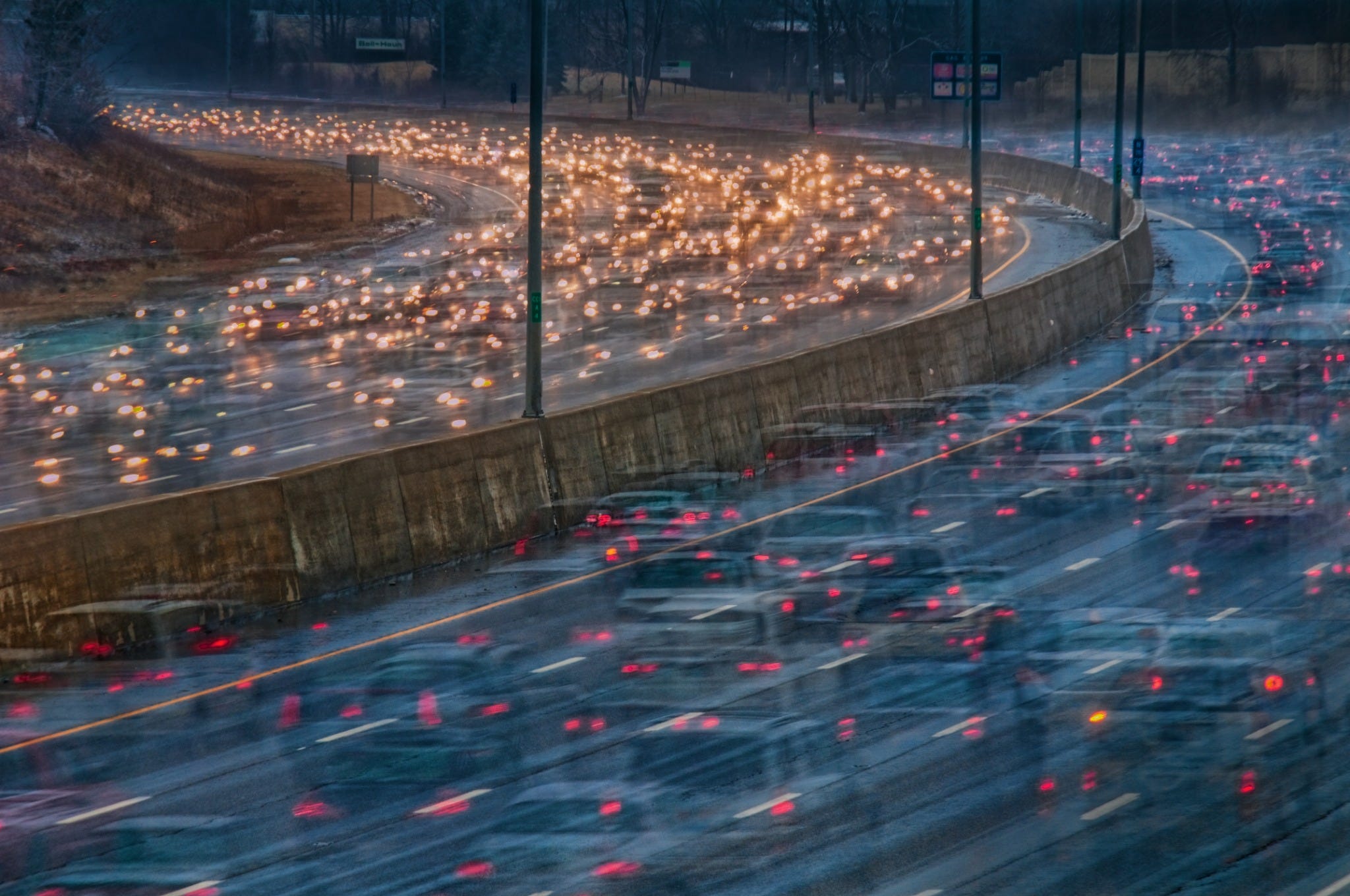
While many photographers chase simplicity, some images thrive by welcoming complexity and shaping it into order. This rain-soaked highway scene, alive with traffic, glowing headlights, blurred taillights, and a sweeping divider, demonstrates how chaos can be sculpted into expressive coherence.
At first, the image nearly overwhelms: hundreds of pinpricks of light, tangled lanes of traffic, slick pavement shimmering with color, and a mist that softens every edge. Yet the photograph succeeds because the photographer uncovers structure within the chaos. The curving median wall acts as a backbone, leading the eye from the foreground into the glowing river of headlights beyond. That single line anchors the frame, preventing it from slipping into pure disorder.
For photographers seeking growth, this is a crucial lesson: complexity craves an anchor. When faced with a busy scene, the goal is not always to erase the clutter, but to discover the visual thread that ties it together. In this case, the sweeping curve of the road and divider transforms chaos into rhythm, turning scattered traffic into a visual pulse.
The photograph’s treatment of motion is its heartbeat. The cars blur and ghost across the frame, breathing life into the scene. This layered effect hints at a slow shutter, multiple exposures, or a careful blend, shifting focus from individual vehicles to the restless, glowing experience of traffic itself. For photographers obsessed with sharpness, this is a reminder: sometimes blur is not a mistake, but the very soul of the image.
Color weaves its own narrative in this image. The golden glow of oncoming headlights stands out against the cool blue-gray of rain-soaked pavement and sky, while red taillights scatter painterly sparks across the scene. This interplay of warmth and chill adds emotional depth, making the frame feel both cold and alive with human energy. Like Saul Leiter’s poetic eye for weather and urban color, this photograph transforms imperfect visibility into atmosphere.
There is a lesson about weather here, too. Many photographers see rain as an obstacle, something to dodge or shield against. Yet wet conditions can turn plain infrastructure into a visual feast: pavement gleams, light scatters, air thickens with texture, and distance melts away. In this photograph, rain is not a nuisance but the very ingredient that makes the image sing.
The elevated vantage point is another triumph. Rather than being confined to road level, the photographer chooses a perch that lets lanes, lights, and divider unfurl into a striking pattern. This perspective transforms traffic into design. Often, the best photographs begin with a simple question: where should I stand to reveal the scene’s hidden structure? This image answers with clarity.
One gentle critique: the image teeters on the edge of visual overload, especially in the lower right where ghosted cars and red taillights cluster thickly. Some viewers might find that patch muddier than the luminous sweep of headlights above. Yet even this density adds to the mood, evoking the press of weather, motion, and congestion crowding into the frame.
The bigger lesson is that a compelling image does not always need a single, obvious subject. Sometimes the subject is flow, or weather, or the collective dance of countless small elements bound by a strong compositional line. This photograph turns a routine commute into a study of movement, mood, and visual harmony. For photographers eager to grow, the message is clear: find the pattern within the chaos, and the ordinary world will reveal far more than mere documentation.

What Is Happening This Week
Here’s the week ahead in photography: more energy around fairs, exhibitions, and community events than around major gear launches, at least on the public calendar. Rotterdam looks like one of the main hubs to watch, with Haute Photographie running March 25 to 29 and Unseen’s Book Market following March 26 to 29. In New York, the International Center of Photography has a notable March 26 opening for Haruka Sakaguchi: The Camps America Built, along with ICP PhotoSLAM: Homecoming the same night. And in London, The Photographers’ Gallery has a full slate across the week, including The Magnum Square Print Sale and public programs on March 26, including Michelle Henning on Photography’s Dirty History and a curator tour for We Others: Donna Gottschalk and Hélène Giannecchini.
On the equipment side, the next few days look comparatively quiet. There may be some product movement tied to late-March availability, but this is not shaping up to be a week defined by major camera or lens reveals. The bigger story is where photographers are gathering, what’s opening, and which deadlines are about to hit.
And there are a few of those worth circling. MontPhoto 2026 closes on March 23. Getxophoto’s Popular Participation deadline lands on March 25. Then March 29 is the key date to watch, with deadlines for the Form Photo Award 2026, Head On Photo Festival submissions, and the Centrale Festival Open Call 2026.
And that’s the week ahead.
PhotoCamp Daily isn’t about the technical skills needed to be a good photographer or a photojournalist. There are numerous resources available, including videos, self-help books, training courses, and classes, as well as the power of social media as a learning tool.
PhotoCamp Daily focuses on learning to experience the process of creating good photos, observing subjects, and their connection to storytelling. It’s about learning to express yourself more effectively, shaping a shared understanding of your world, and embracing the new experiences you encounter.
PhotoCamp Daily is always free! But you can pledge support at any time.