

What Remains
A photograph can describe a place without completely explaining it. Sometimes what is withheld is what gives the photograph its strength.
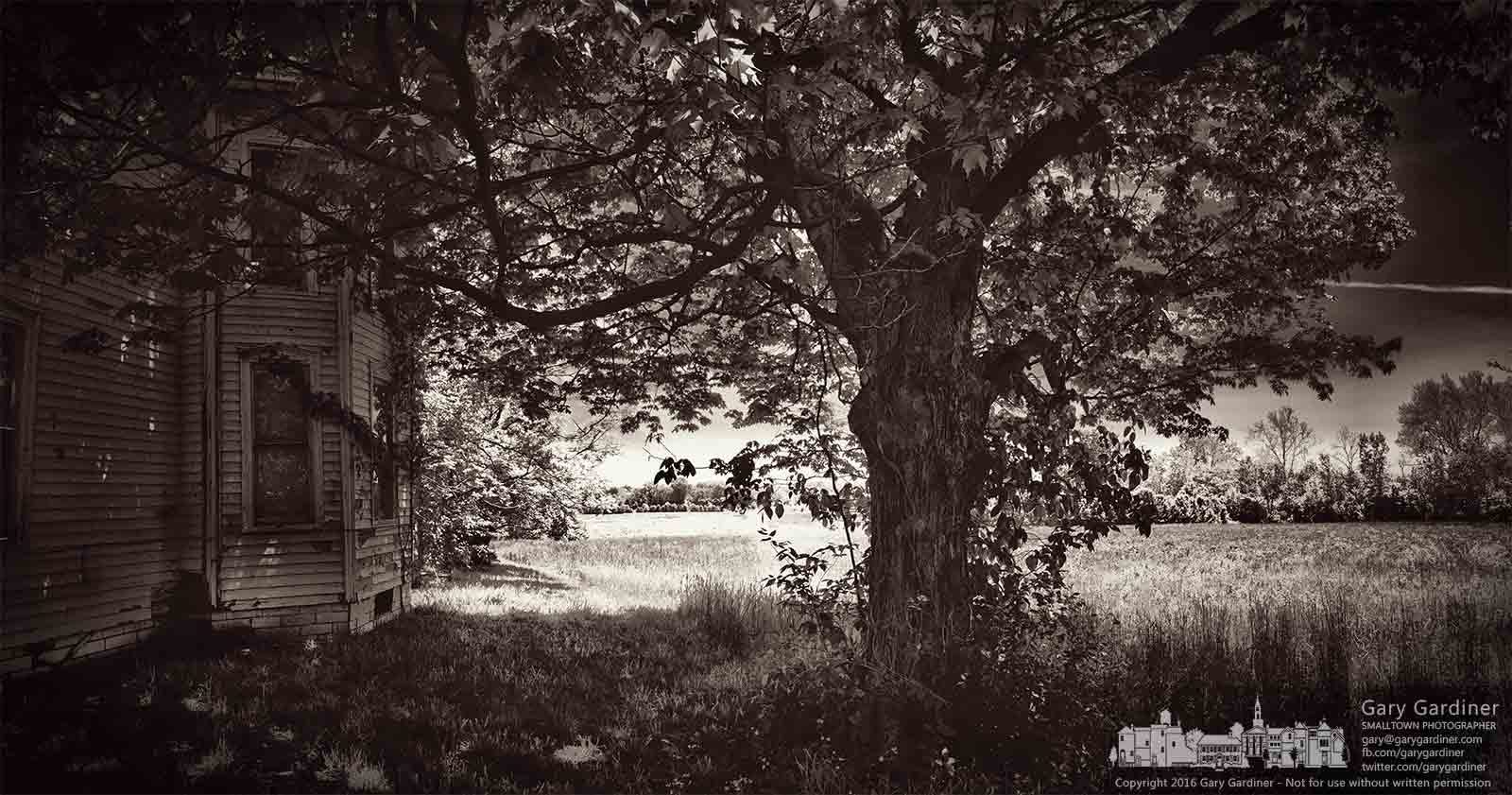
When I made this photograph, this small piece of farmland was already surrounded by apartments, businesses, and asphalt roads. Yet from this position, almost none of that intrudes. The house, tree and field occupy their own small world.
The composition establishes the location through three principal elements. The old house enters from the left but is deliberately incomplete. The enormous tree dominates the center. Beyond it, the field opens into sunlight and extends toward the distant tree line.
The house may be the most important element precisely because we see so little of it.
We see weathered siding, windows, and deep shadows beneath the tree. We don’t see the entire structure. No conventional view explains its architecture or condition. The frame cuts it off, leaving enough evidence to establish its presence but not enough to satisfy our curiosity.
That incompleteness creates questions. What does the rest of the house look like? How old is it? Who lived there? Why is this farm still here? What surrounds it? Why did the photographer consider this particular place worth remembering?
The tree works differently. Its massive trunk divides the enclosed darkness around the house from the open field beyond. Its branches spread across the top of the photograph, holding the house and field together beneath a common canopy. Visually, it feels permanent.
History proved otherwise. The house was left to deteriorate until it eventually had to be demolished. The tree remains. The farm remains. Memories of the people and life associated with the house remain.
And the photograph remains.
That changes what the composition means over time. What was once a partially concealed house is now something the viewer can no longer walk around the corner to see. The unanswered questions contained in the photograph have become permanent.
Other photographs can answer some of them. That may be one measure of the strength of this one. It doesn’t attempt to tell everything about the place. It establishes its character strongly enough that the viewer might want to see the next photograph, and then another, to discover why this house, this tree and this small surviving farm mattered.
A storytelling photograph doesn’t always have to provide the answers. Sometimes its strength is in making the viewer ask the questions.

PhotoCamp Daily isn’t about the technical skills needed to be a good photographer or a photojournalist. Numerous resources are available, including videos, self-help books, training courses, classes, and social media as a learning tool.
PhotoCamp Daily focuses on learning the process of creating good photos, observing subjects, and connecting them to storytelling. It’s about learning to express yourself more effectively, shaping a shared understanding of your world, and embracing new experiences.
PhotoCamp Daily is always free! But you can pledge support at any time.
