

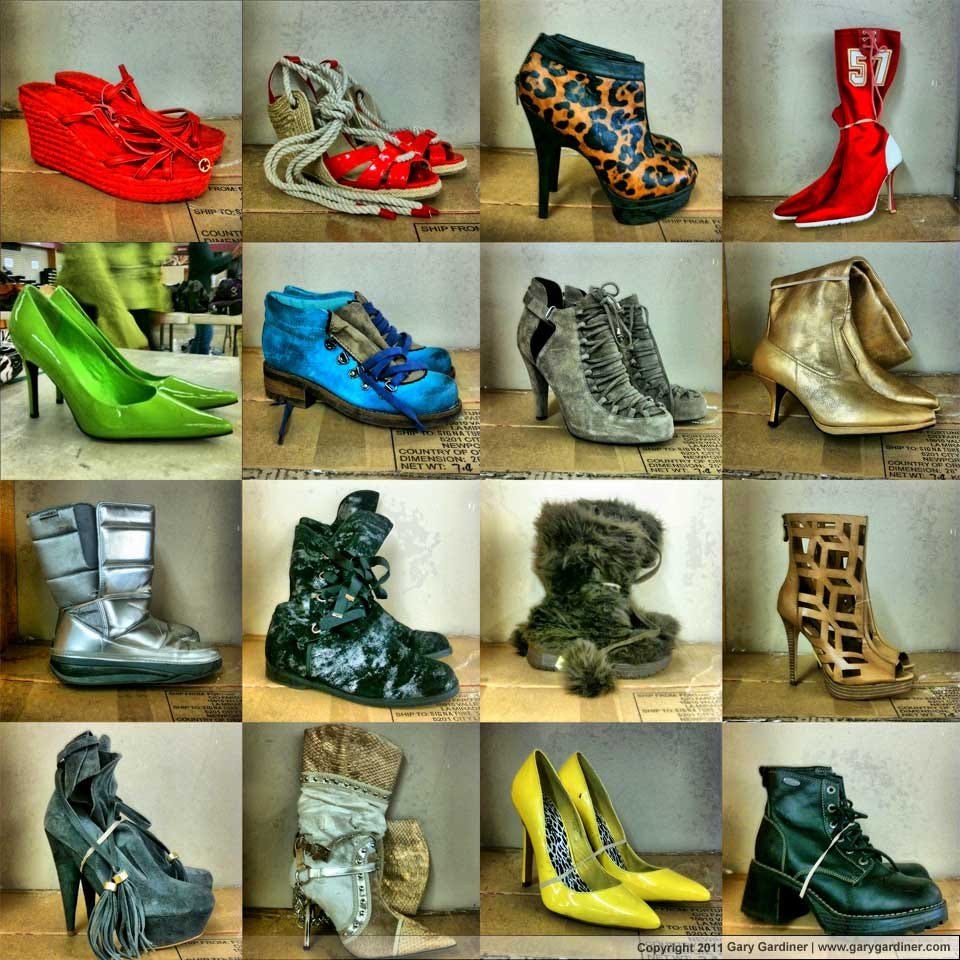
Lessons in Photographic Composition from a Grid of Shoes
Photographers are frequently encouraged to pursue dramatic lighting, rare moments, and expansive scenes. However, a highly effective way to advance photographic skill is to analyze images that achieve impact through compositional structure rather than visual spectacle. For example, a straightforward arrangement of shoes on shelves can provide valuable insights.
Initially, the photograph appears to be a playful assortment of footwear, including bright red wedges, leopard-print boots, lime-green pumps, silver winter boots, furry slippers, and yellow heels. However, beneath the surface of fashion and color lies a lesson in visual organization. The image is effective due to its use of repetition, variation, and compositional control.
The composition is organized as a grid, with each compartment functioning as an individual stage. This arrangement provides viewers with a systematic approach to interpreting the photograph. Rather than visual chaos, the image exhibits rhythm. Each shoe possesses distinct characteristics, yet the shelving maintains order. This equilibrium between structure and unpredictability is applicable across various photographic genres, including portraiture, interior, food, and street photography. A compelling image typically requires both a framework to sustain attention and a contrasting element to maintain visual interest.
Color also contributes significantly to the image’s effectiveness. The muted, utilitarian background enables the saturated hues of the shoes to become the focal point. Although red, blue, green, silver, yellow, and black compete for attention, the photograph avoids visual clutter due to the neutral shelves and cardboard, which provide balance. This demonstrates that color is most effective when given space within the composition. Not every element within a frame should be visually dominant; often, the most critical role is fulfilled by the most subdued tone.
The treatment of the subject offers an additional lesson. None of the shoes is photographed in isolation against a seamless studio backdrop; instead, the photographer incorporates contextual elements. The shelves, the cardboard surface, and subtle variations in placement all contribute to the composition's character. For those seeking to enhance their photography, it is important to recognize that technical perfection is not always the objective. Minor imperfections can render an image more authentic and engaging.
The photograph further illustrates the importance of consistency. The lighting remains uniform throughout the frame, facilitating direct comparison between items. This approach is particularly valuable when creating a photographic series. In typologies, collections, or any images emphasizing repetition, consistency becomes integral to the composition. The focus shifts from merely documenting individual objects to capturing their relationships.
What should photographers take from this? First, train your eye to observe patterns. Shelves, windows, doors, chairs, market stalls, and parking spaces can all become ready-made compositions. Second, look for variation within repetition. The repeated structure gives cohesion, while the differences create energy. Third, use background and negative space strategically. A neutral setting can be the key to bold subjects succeeding. And finally, do not dismiss ordinary subjects. A strong photographer can create visual interest from almost anything when composition leads the way.
This image demonstrates that effective photography does not depend solely on extraordinary subjects. The primary lesson is to approach commonplace scenes with discipline, curiosity, and intentional design. Often, progress in photography results from a deeper understanding of visual structure rather than from acquiring new equipment.

Here’s today’s photography news digest …
featuring 10 notable stories published in roughly the last 24 hours. The latest coverage spans competitions, camera gear, imaging tech, and industry developments, with a particular focus on stories most relevant to working photographers and enthusiasts.
1. Winners of Pro Baseball Photo Competition Knock It Out of the Park
PetaPixel spotlights the latest winners of a pro baseball photo competition, with the emphasis squarely on timing, storytelling, and split-second sports imagery. It is one of the freshest photography-specific stories today and works as both contest coverage and a reminder of how much elite sports photography depends on anticipation and precision.
2. UK Creatives Score Victory Against AI Companies in Training Dispute
This is arguably the most consequential industry story in the roundup. PetaPixel reports that the U.K. government has backed away from proposed copyright reforms that would have allowed AI companies to use copyrighted work without permission, a major development for photographers concerned about image licensing, consent, and training data policy.
3. The Alfie Boxx Develops its Photos Inside the Camera
This piece covers an analog camera project designed to teach the photographic process more holistically, from capture through print. It stands out because it is not just another gear launch; it is about process, education, and making photography feel more tactile and understandable for newcomers.
4. Canon’s PowerShot SX740 HS Lite is a great compact camera… if you can actually find one!
Digital Camera World uses the SX740 HS Lite to illustrate a larger market trend: compact cameras are still in demand, and availability is part of the story. The article is less a pure review than a snapshot of how older pocketable cameras continue to attract buyers in a market that still has supply gaps.
5. The “best retro compact camera” returns to No.1 in the charts – and Leica celebrates its first best-seller chart success
This is a useful market pulse story. Digital Camera World reports that the Fujifilm X100VI is back on top of the sales chart, while Leica also makes a notable appearance, reinforcing how strong demand remains for premium, retro-styled cameras with enthusiast appeal.
6. This Fujifilm instant film favorite is finally getting a classic makeover. The Instax Wide 400 will soon be available in a classic black look
A lighter but still timely product story, this article reports that Fujifilm’s Instax Wide 400 is getting a black finish. That may sound cosmetic, but for instant cameras, design is part of the appeal, and the piece reflects how brands continue to treat instant photography as both a creative and lifestyle category.
7. This Sony stacked sensor uses an unusual design to help to save costs and boost performance
One of the more technical stories in the mix, this report looks at Sony’s IMX820 sensor and its chip-on-wafer architecture. For photographers, the significance is indirect but real: sensor-design changes like this can influence future camera performance, manufacturing cost, and the kinds of imaging hardware that reach the market next.
8. 360 cameras were missing a key accessory. Now, 360 cameras are finally getting immersive lighting – this one costs just US$95
This story focuses on the Harlowe Omni 360, a lighting accessory designed specifically for 360 cameras. What makes it interesting is that 360 gear has often lagged behind mainstream photography in ecosystem support, so this feels more like a sign of the category maturing than just another accessory launch.
9. I found a 3D camera at The Photography & Video Show that works just like your brain. The Loreo Panfocus 28mm makes 3D almost as simple as a point-and-shoot
This is the most charmingly offbeat item in the digest. Digital Camera World highlights a stereoscopic film camera spotted at The Photography & Video Show 2026, framing it as an accessible route into 3D photography and a reminder that not all photographic innovation has to be digital or software-driven.
10. Out of nearly half a million photos, only these made the cut: the inspiring winners from around the world
This piece covers the Sony World Photography Awards 2026 National and Regional winners, drawn from nearly 430,000 entries across more than 200 countries. It earns a place here because it is both major contest news and a broad visual survey of what themes, subjects, and styles are resonating globally right now.
Taken together, today’s coverage points to three clear themes: strong ongoing demand for compact and instant cameras, continued experimentation around niche formats like 3D and analog, and growing pressure on the photography industry to define how copyright and AI should interact.
PhotoCamp Daily isn’t about the technical skills needed to be a good photographer or a photojournalist. There are numerous resources available, including videos, self-help books, training courses, and classes, as well as the power of social media as a learning tool.
PhotoCamp Daily focuses on learning to experience the process of creating good photos, observing subjects, and their connection to storytelling. It’s about learning to express yourself more effectively, shaping a shared understanding of your world, and embracing the new experiences you encounter.
PhotoCamp Daily is always free! But you can pledge support at any time.
