

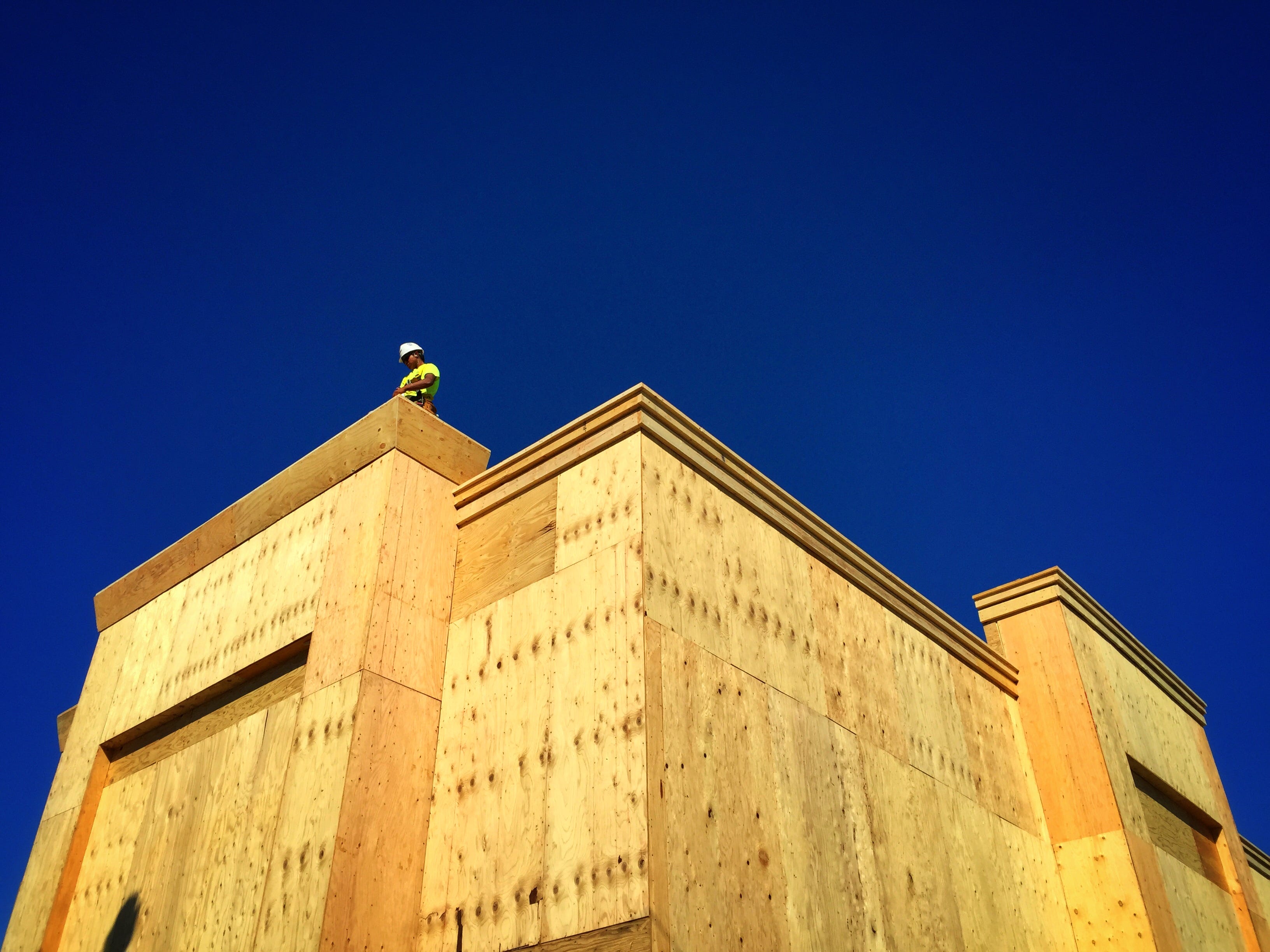
Sometimes a photograph works because almost everything it needs is already there. In this image, the essentials were waiting overhead: shape, scale, color, and a single human figure in exactly the right place.
What makes the frame hold is the angle. From below, an unfinished building stops reading as ordinary construction and starts to feel monumental. Raw plywood, hard edges, and the sharp corner pushing into the sky turn the structure into something graphic and severe. It becomes less a record of a job site than a study in mass, geometry, and proportion.
The worker at the top is the element that fully lands the picture. He is small, nearly overwhelmed by the structure around him, and that imbalance is what gives the image its tension. He provides scale, but he also shifts the frame from abstraction into lived reality. Suddenly, the photograph is not only about lines and planes, but about labor, exposure, and human effort.
Negative space does much of the work here as well. The deep blue sky is clean and uninterrupted, giving the structure room to assert itself and allowing the edges to read with clarity. It also leaves the worker isolated near the top of the frame, adding a quiet sense of risk.
Color is handled with restraint. The warm tone of the wood plays against the saturated blue of the sky, while the worker’s bright shirt becomes a small but essential accent near the top of the composition. In a stripped-down frame like this, every color has to earn its place.
What makes the photograph memorable is the balance between formal composition and human presence. It is graphic without feeling cold, minimal without feeling empty. That tension—between abstraction and reality—is what gives the image its staying power.
It is also a useful reminder for photographers: not every strong picture depends on complexity. Sometimes all that is required is a clear angle, clean light, disciplined framing, and one element that brings the whole structure to life.

PhotoCamp Daily isn’t about the technical skills needed to be a good photographer or a photojournalist. There are numerous resources available, including videos, self-help books, training courses, and classes, as well as the power of social media as a learning tool.
PhotoCamp Daily focuses on learning to experience the process of creating good photos, observing subjects, and their connection to storytelling. It’s about learning to express yourself more effectively, shaping a shared understanding of your world, and embracing the new experiences you encounter.
PhotoCamp Daily is always free! But you can pledge support at any time.
